Billing data schema
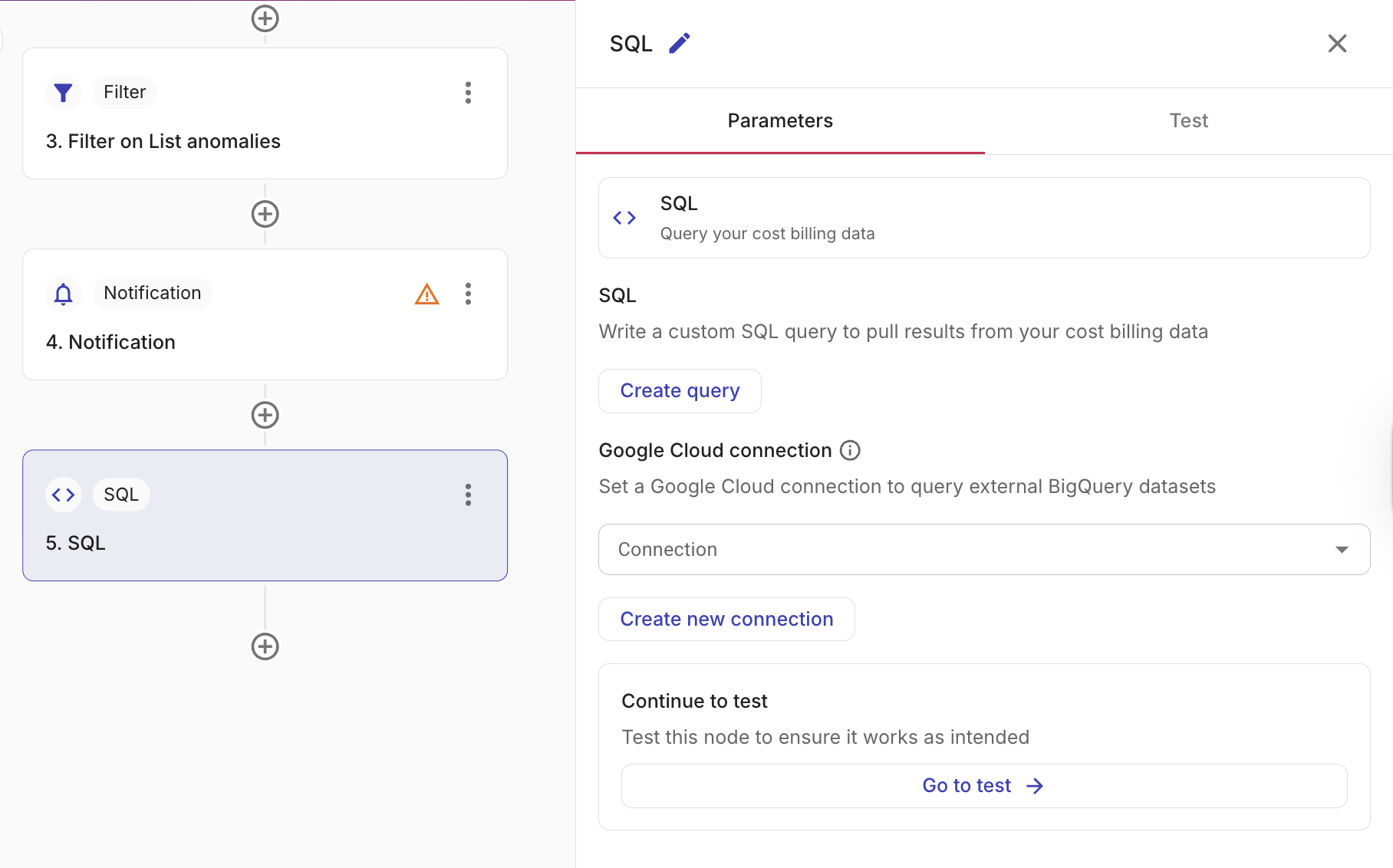
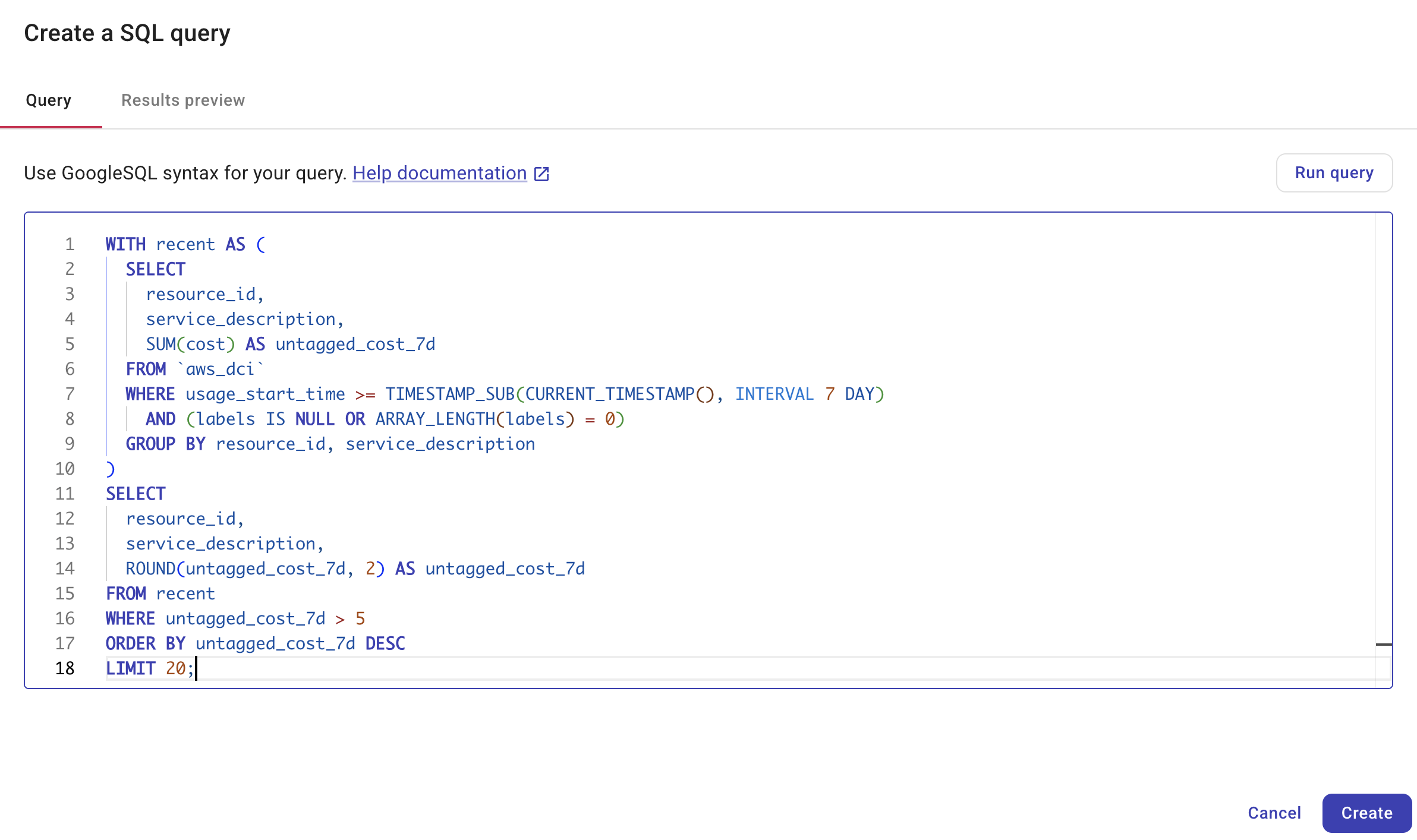
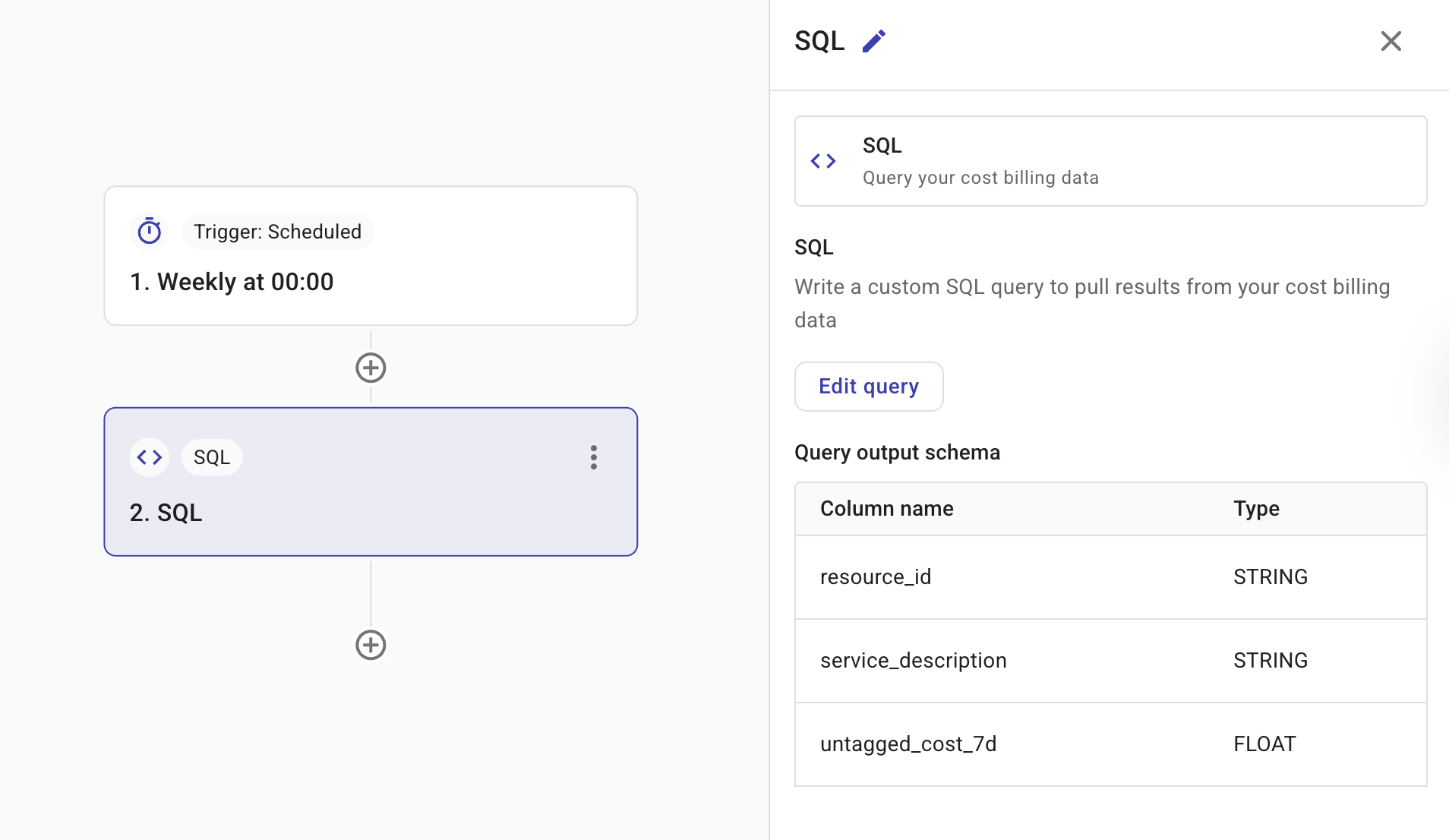
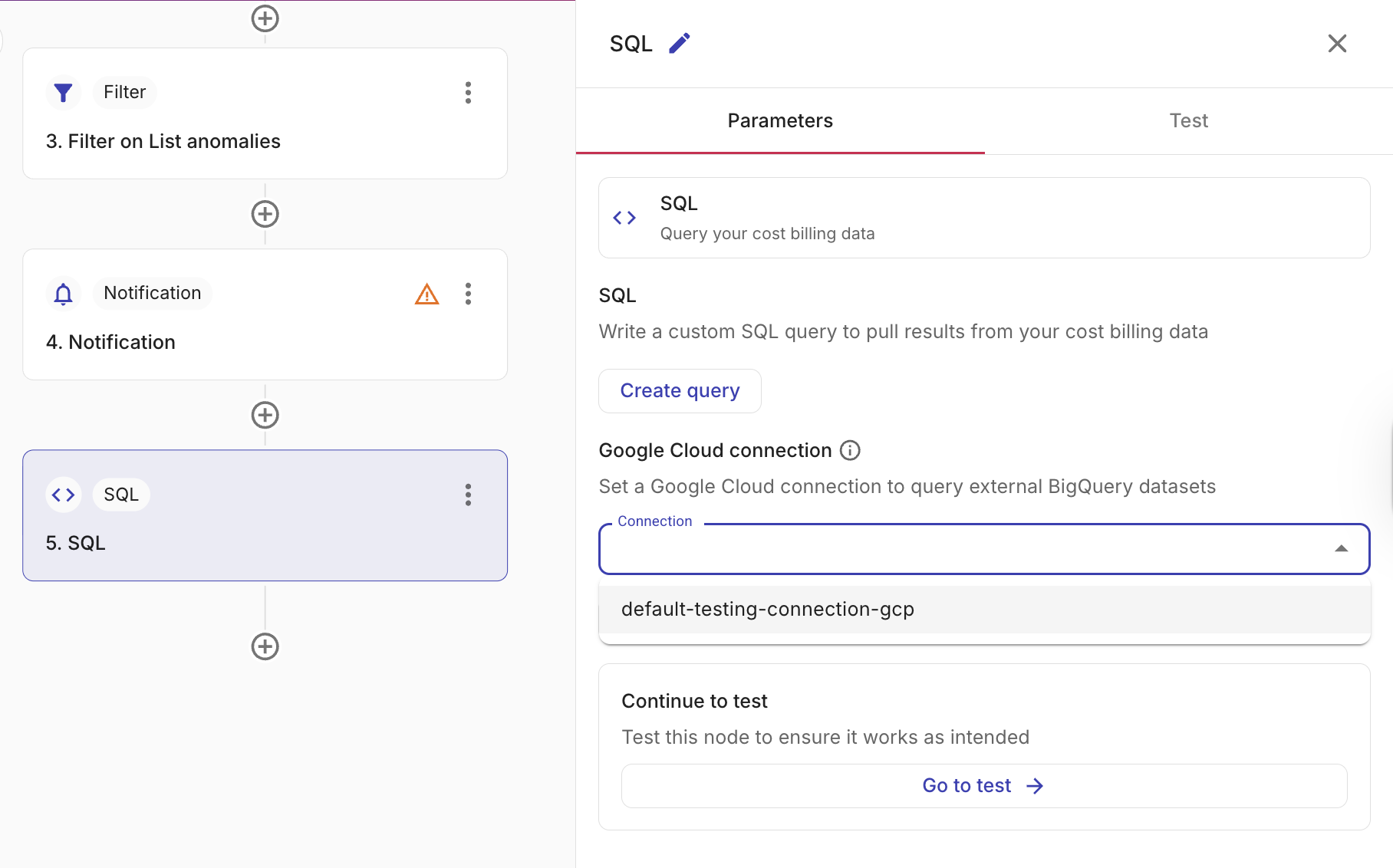
This page provides the schema definition for the billing data available in DoiT Cloud Intelligence. The schema defines the structure of the billing data tables available for the CloudFlow SQL node.
DoiT Cloud Intelligence utilizes a unified billing data schema across both AWS and Google Cloud. Provider-specific metadata that cannot be unified, such as AWS Savings Plan details, are included as supplementary fields.
You can query your data using the provider-specific table names, both of which share the same schema defined below.
aws_dcigcp_dci
Billing data schema definition
The following table defines the structure of the billing data stored in DoiT Cloud Intelligence.
Extract, transform, Load (ETL)
The following fields define when usage occurred and when a record was processed. It includes timestamps and identifiers allowing you to track data lineage and processing history.
| Field name | Data type | Description | Sample values |
|---|---|---|---|
etl | RECORD | A top-level record that holds metadata detailing the Extract, Transform, and Load (ETL) process used to ingest the billing data on DoiT Cloud Intelligence. | {‘load_time’: ‘2024-11-02’} |
ts | TIMESTAMP | The timestamp when the associated usage, event, or billing record was created or logged. | 2025-11-20 16:11:46.901 UTC |
file_update_time | TIMESTAMP | The timestamp when the original source billing file or data segment was last modified or written by the cloud provider. | 2024-11-02 00:02:40 UTC |
session_id | STRING | Links a specific usage record to a large processing session that generated the data. | etl_run_20251120_a7b3c9d1 |
manifest_update_time | TIMESTAMP | The timestamp when the manifest (or index) file was last updated. | 2024-11-02 00:02:40 UTC |
run_start_time | TIMESTAMP | The timestamp when the specific ETL job or data pipeline run began that was responsible for processing the usage record on the DoiT platform. | 2024-11-02 00:02:40 UTC |
Project data
The following fields define the project that incurred the usage and costs. These fields allow you to aggregate and filter costs based on project, organizational structure, or custom business logic (labels/tags).
| Field name | Data type | Description | Sample value |
|---|---|---|---|
project_id | STRING | The unique identifier for the specific cloud project or resource container where the recorded usage occurred. | my-prod-app-312345 |
project_name | STRING | The name of the specific cloud project or resource container where the recorded usage occurred. | Production Core Services |
labels | RECORD | A list of custom, user-defined key-value pairs (tags) applied to the resource for organizational, cost allocation, or management purposes. | {'environment': 'production', 'team': 'finance'} |
ancestry_numbers | STRING | A unique identifier that represents the hierarchical path of the resource within the cloud organization's structure, often used for policy enforcement. | 12345678/90123456/ |
number | STRING | A numerical identifier for the project or resource container, often used as an alternative or complementary ID to the project_id. | 123456789012 |
Service, product and usage
The following fields describe what was consumed, when it was consumed and by whom, providing granular cost analysis, rate verification, and usage tracking.
| Field name | Data type | Description | Sample value |
|---|---|---|---|
billing_account_id | STRING | The unique identifier for the financial entity responsible for paying all charges incurred by the cloud account or project. | AWS-389765432100 |
service_description | STRING | The human-readable name of the cloud service consumed, for example, Amazon EC2. | Amazon Elastic Compute Cloud |
service_id | STRING | The unique identifier for the cloud service consumed, for example, the Cloud Service ID or code. | AmazonEC2 |
sku_description | STRING | The human-readable description of the specific billable unit or resource consumed, for example, N1 Standard Machine Hour. | BoxUsage:t3.medium |
sku_id | STRING | The unique identifier that represents the specific product, feature, or pricing component being tracked for billing. | B5F7F8N7E09Q8A4T |
usage_date_time | DATETIME | The timestamp that specifies the date and time when the resource consumption took place. | 2025-11-15 10:00:00 |
usage_start_time | TIMESTAMP | The timestamp that marks the beginning of the time interval for which the specific usage amount was recorded. | 2025-11-15 09:00:00 UTC |
usage_end_time | TIMESTAMP | The timestamp that marks the end of the time interval when the recorded consumption of the specific resource or service concluded for that billing line item. | 2025-11-15 10:00:00 UTC |
Location
The following fields define the locations where the usage occurred. These fields allow you to compare service efficiency and price variations across different cloud regions.
| Field name | Data type | Description | Sample values |
|---|---|---|---|
location | STRING | A label for the geographical area where the resource or service is hosted, which may be more specific than the high-level region. | Northern Virginia |
country | STRING | The sovereign nation associated with the billing account or the physical location of the resource. | USA |
region | STRING | The primary, named geographical area, for example, us-east-1, that hosts the data centers where the service is provisioned. | us-east-1 |
zone | STRING | The specific, isolated data center location within a region, also known as an availability zone, for example, us-east-1a. | us-east-1a |
Financial
The following fields define the financial information in the billing data, enabling you to calculate the true cost of consumption and precise rate calculation.
| Field name | Data type | Description | Sample values |
|---|---|---|---|
export_time | TIMESTAMP | The timestamp indicating when the billing report data was generated and exported from the cloud provider. | 2024-11-02 00:02:40 UTC |
cost | FLOAT | The total monetary value incurred for the usage of the specific resource or service before any discounts, taxes, or credits. | 5.75 |
currency | STRING | The three-letter ISO code, for example, USD or EUR, for the denomination in which the costs and amounts are expressed. | USD or EUR |
currency_conversion_rate | FLOAT | The numerical rate used to convert the original billed Currency into the reporting Currency for the billing statement. | 1.085 |
amount | FLOAT | The final monetary value after applying any discounts, credits, or taxes, representing the actual charge to the account. | 5.60 |
unit | STRING | The standardized metric, for example, GB, Hours, or Requests, used to measure the quantity of the service consumed. | GB or Hours |
amount_in_pricing_units | FLOAT | The quantity of service usage measured according to the standard unit specified by the pricing model. | 1024.0 |
pricing_unit | STRING | The standard measure, for example, GB-Mo, Hours, or Request, used to define the cost for a given service. | GB-Mo or Request |
Invoice and charge identifiers
The following fields define cost and usage for accounting purposes. These fields allow you to aggregate usage and cost necessary to trace amounts directly back to the action that triggered the charge.
| Field name | Data type | Description | Sample values |
|---|---|---|---|
month | STRING | The calendar month and year, for example, 2023-01, to which the billing data applies. | 2025-11 |
invoice | RECORD | The unique identifier assigned to the final, consolidated bill for a specific billing period. | INV-ABC-1234567 |
cost_type | STRING | A categorization of the cost based on its purpose or nature, such as Usage, Tax, or Credit. | Usage, Tax, or Credit |
resource_id | STRING | A unique identifier, for example, an ARN or instance ID, for the specific resource that incurred the cost. | i-0f23ab91c5d4ef123 (EC2 Instance ID) |
operation | STRING | The specific action or function performed by the service, for example, RunInstance, PutObject, that triggers the charge. | RunInstance, PutObject, or APICall |
Report
The following fields define the reports that define the usage that occurred. These fields allow you to reconcile your cloud spending and optimize your costs by providing a clear breakdown of gross cost and consumption. They also track cost reduction, enabling you to audit the effectiveness of your discount programs.
| Field name | Data type | Description | Sample values |
|---|---|---|---|
cost | FLOAT | The gross monetary value incurred for the usage of the specific resource or service before any discounts, taxes, or credits are applied. | 35.40 |
usage | FLOAT | The measured quantity of the service consumed, typically measured in units like hours, GB, or requests. | 720.5 |
savings | FLOAT | The monetary amount representing the reduction in cost due to Reserved Instances (RIs), Savings Plans, or other negotiated agreements. | 8.85 |
savings_description | STRING | A description detailing the type of agreement or mechanism that resulted in the reported savings amount. | AWS Savings Plan Discount |
credit | STRING | A monetary offset applied to the bill, often originating from refunds, promotional balances, or service level agreement (SLA) adjustments. | 5.00 |
ext_metric | RECORD | A list of key value pairs for storing custom or non-standard usage or billing metrics that are external to the main cost calculations. | {'key': 'datacenter', 'value': 'eu-dc-03'} |
AWS metrics
The following fields relate to AWS Savings Plans (SP) and Reserved Instances (RI), allowing you to calculate the true cost of usage under Savings Plans and Reserved Instances.
| Field name | Data type | Description | Sample values |
|---|---|---|---|
sp_amortized_commitment | FLOAT | The portion of the Savings Plan's upfront fee or total commitment that is allocated and recognized as an expense for the current billing period. | 0.45 |
sp_recurring_commitment | FLOAT | The fixed hourly or daily monetary fee paid toward the Savings Plan commitment for Partial Upfront or No Upfront plans. | 1.00 |
sp_effective_cost | FLOAT | The calculated, effective rate for the usage covered by a Savings Plan, which smooths out the commitment costs across the covered usage hours. | 0.075 |
sp_plan_rate | FLOAT | The deeply discounted rate applied to usage that is covered by the commitment of the Savings Plan. | 0.009 |
sp_total_commitment_to_date | FLOAT | The running total dollar amount of the amortized upfront fee and recurring commitment that has been recognized up to the current hour/day. | 24.75 |
sp_used_commitment | FLOAT | The monetary value of the Savings Plan's committed spend that was actually applied to and consumed by eligible usage. | 1.50 |
ri_amortized_upfront_usage_cost | FLOAT | The part of the Reserved Instance's initial, one-time upfront fee that is recognized as a cost for the current usage hour or day. | 0.12 |
ri_amortized_upfront_period_fee | FLOAT | The portion of the Reserved Instance's upfront fee that is spread out and recognized as a fee for the current billing period, regardless of usage. | 0.035 |
ri_effective_cost | FLOAT | The calculated, effective rate for the usage covered by a Reserved Instance, which includes both the amortized upfront fee and the recurring fee. | 0.050 |
ri_recurring_usage_fee | FLOAT | The ongoing hourly or monthly monetary charge associated with the Reserved Instance, excluding the initial upfront payment. | 0.035 |
ri_unused_amortized_period_fee | FLOAT | The monetary value of the amortized upfront fee that was paid but corresponds to unused hours of the Reserved Instance capacity. | 0.00 (if fully utilized) or 0.50 |
ri_unused_nfu | FLOAT | The amount of the Reserved Instance commitment, measured in normalized units, that was paid for but not utilized during the billing period. | 1440.0 |
ri_unused_recurring_fee | FLOAT | The portion of the Reserved Instance's recurring monthly fee that corresponds to the capacity that was paid for but remained idle. | 4.50 |
ri_upfront_value | FLOAT | The initial, total, one-time monetary charge paid at the time of purchasing a Reserved Instance. | 540.00 |
public_ondemand_rate | FLOAT | The standard, publicly listed price per unit of usage for the resource, without any discounts, Savings Plans, or Reserved Instances applied. | 0.116 |
public_ondemand_cost | FLOAT | The total cost for the usage amount at the public_ondemand_rate, representing what the service would have cost without any discounts. | 8.35 |
Marketplace and customer
These fields define the identifiers and descriptions that define each row of data in the bill. These fields allow you to understand exactly what was purchased and by whom, essential for attributing costs.
| Field name | Data type | Description | Sample values |
|---|---|---|---|
row_id | STRING | A unique identifier assigned to each individual line item within the billing data report. | f81c2de1-ff9b-4a5a |
description | STRING | A human-readable description explaining the specific service, action, or context of the charge or line item. | Hourly usage for t2.medium in US East (N. Virginia) |
customer_type | STRING | An identifier indicating the entity type of the billing account, such as whether it's a standard customer or a specialized type like a Reseller or Government account. | Enterprise, Reseller |
is_marketplace | STRING | A boolean flag (typically true or false) that identifies whether the corresponding line item charge originated from a third-party product or service purchased through the cloud provider's marketplace. | true, false |
customer_id | STRING | The unique identifier of the account that incurred the usage and is responsible for the charge, especially useful in Consolidated Billing environments. | 123456789012 |
Labels and tagging
Labels track and categorize resources, enabling you to analyze your tag coverage and cost allocation.
| Field name | Data type | Description | Sample values |
|---|---|---|---|
system_labels | RECORD | A list of system created key-value pairs (tags) applied to a resource for the purpose of cost tracking, reporting, or system management. | {‘env’: ‘prod’} |
labels | RECORD | A list of custom, user-defined key-value pairs (tags) applied to the resource for organizational, cost allocation, or management purposes. | {‘goog-created-by’: ‘system’} |