Billing utilities (Reseller only)
Billing utilities allow resellers to manually trigger data recalculation and invoice refresh for end customers:
-
Data recalculation: Reruns the billing pipeline using the latest contract rules and price book. It can take two or more hours to complete.
-
Invoice refresh: Generates new invoices using the latest billing data; typically completes within minutes.
Required permission
To run recalculation or refresh, your DoiT account must have the Billing Utilities Admin permission.
Access billing utilities
To access the billing utilities, sign in to the DoiT console, select Billing > Billing utilities from the top navigation mega menu.
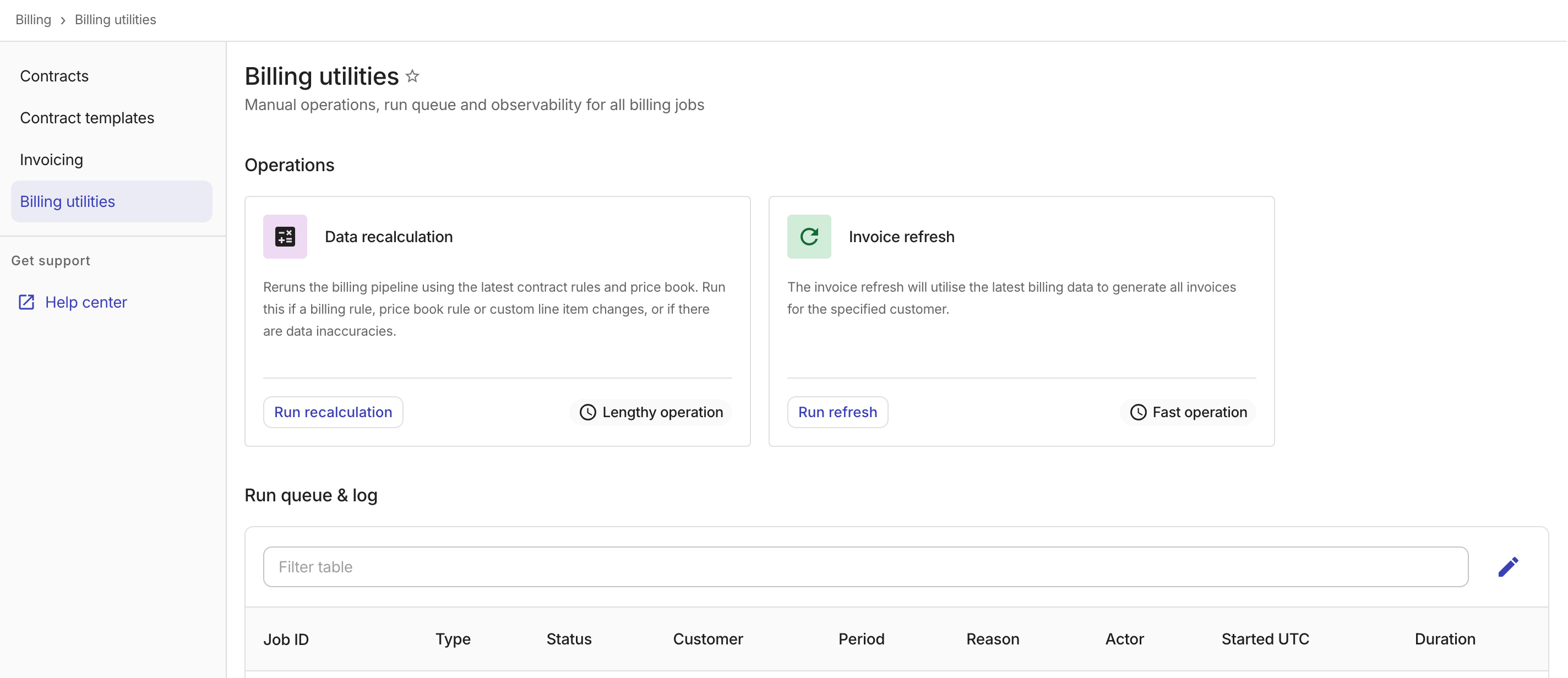
Data recalculation
Data recalculation reruns the billing pipeline using the latest contract rules and price book. Run a recalculation when:
-
A billing rule or price book rule was updated after billing ran for that period.
-
A custom line item was added or modified retroactively.
-
Data inaccuracies in a past billing period are identified and need to be corrected.
Data recalculation can take two or more hours to complete. Contract rules from the currently active contract are applied to the selected billing periods, and recalculation is performed for all available management accounts under the selected customer.
Run recalculation
-
Navigate to the Billing utilities page.
-
In the Operations section, select Run recalculation on the Data recalculation card.
-
In the Data recalculation dialog, fill in the required fields:
-
Customer: Select the customer. The list shows customers with an active contract and a linked management account affected by that contract. End customers whose member accounts are mapped from a parent reseller's shared payer also appear in this list.
-
Billing period(s): Select one or more past billing periods. Available periods are based solely on the end customer's contract coverage, regardless of the reseller's contract.
-
Reason: Select a reason for the recalculation. For example:
Credit and adjustment issues,Incorrect Charges, orOther. If you chooseOther, optionally provide an explanation.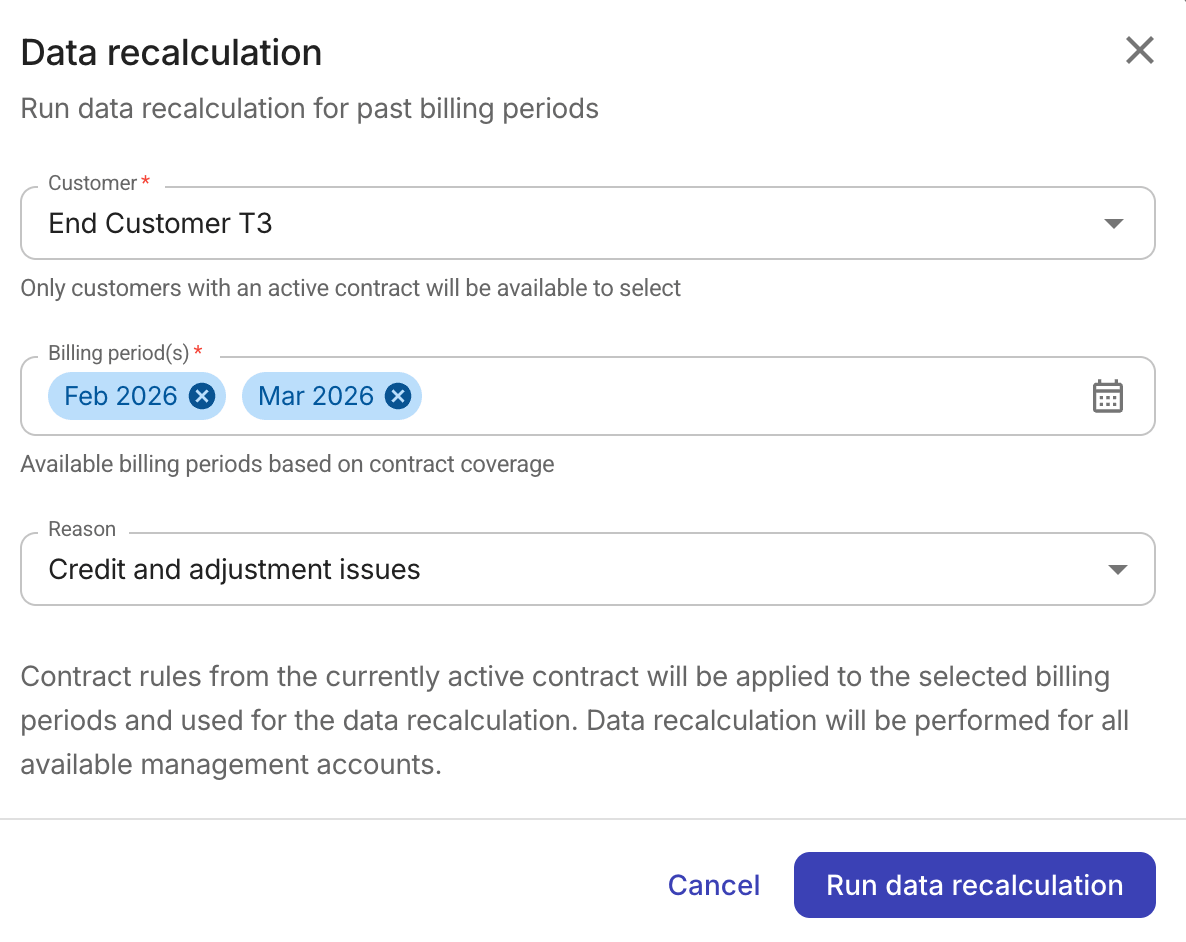
-
-
Select Run data recalculation.
Once submitted, the job appears in the Run queue & log table. See Monitor progress.
Invoice refresh
Invoice refresh generates new invoices for a customer using the latest billing data. It typically completes within minutes.
Refresh is performed for all available management accounts under the selected customer.
Run refresh
-
Navigate to the Billing utilities page.
-
In the Operations section, select Run refresh on the Invoice refresh card.
-
In the Invoice refresh dialog, fill in the required fields:
-
Customer: Select the customer. The list shows customers with an active contract and a linked management account affected by that contract. End customers whose member accounts are mapped from a parent reseller's shared payer also appear in this list.
-
Billing period(s): Select one or more past billing periods. Available periods are based on the customer's contract coverage.
-
Reason: Select a reason for the refresh. For example:
Credit and adjustment issues,Incorrect Charges, orOther. If you chooseOther, you must provide an explanation.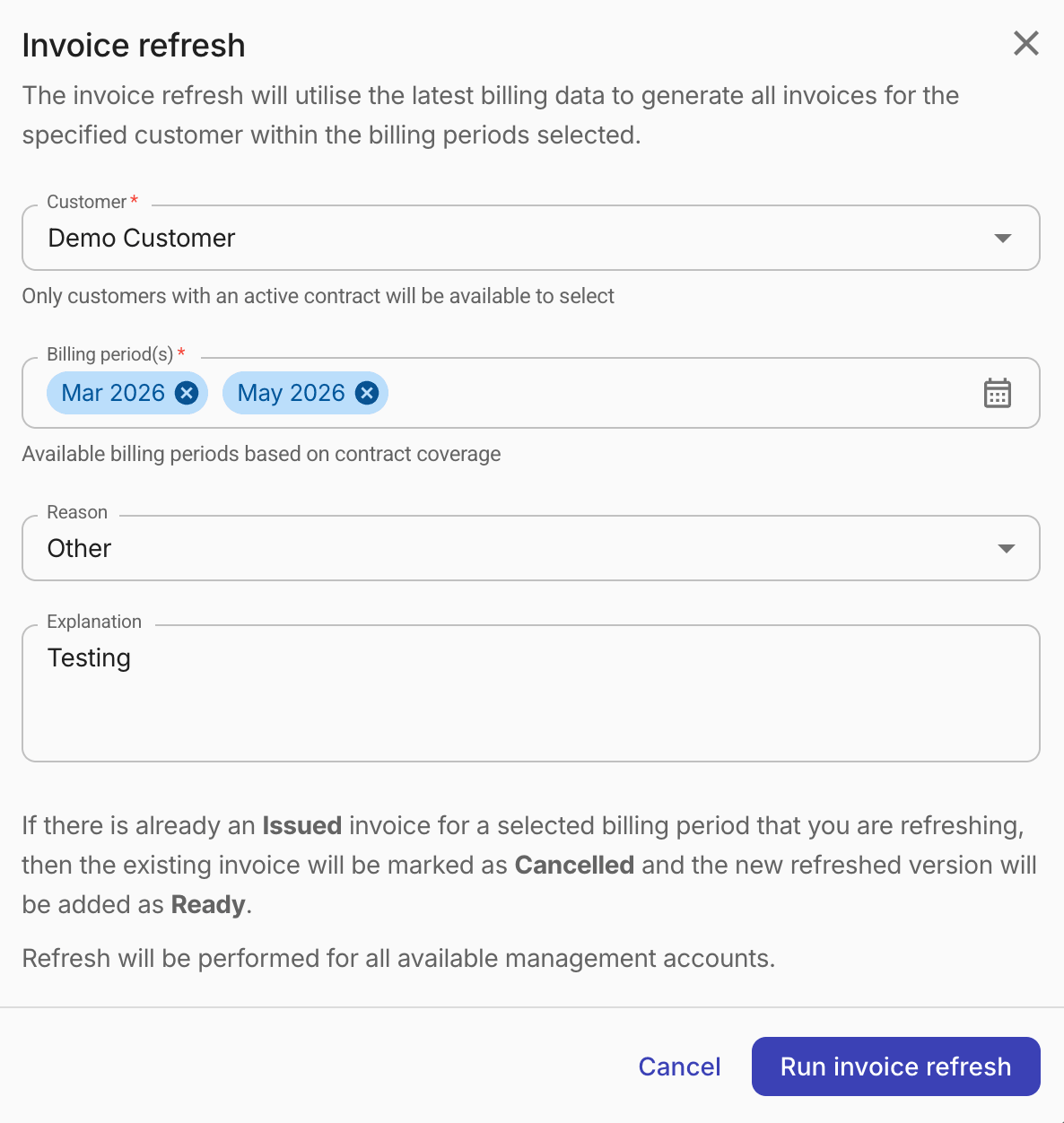
-
-
Select Run invoice refresh.
If there is already an Issued invoice for a selected billing period, the existing invoice is marked as Cancelled and the new refreshed version is added as Ready.
Monitor progress
Once submitted, the job appears in the Run queue & log table, which displays all operations and their status.
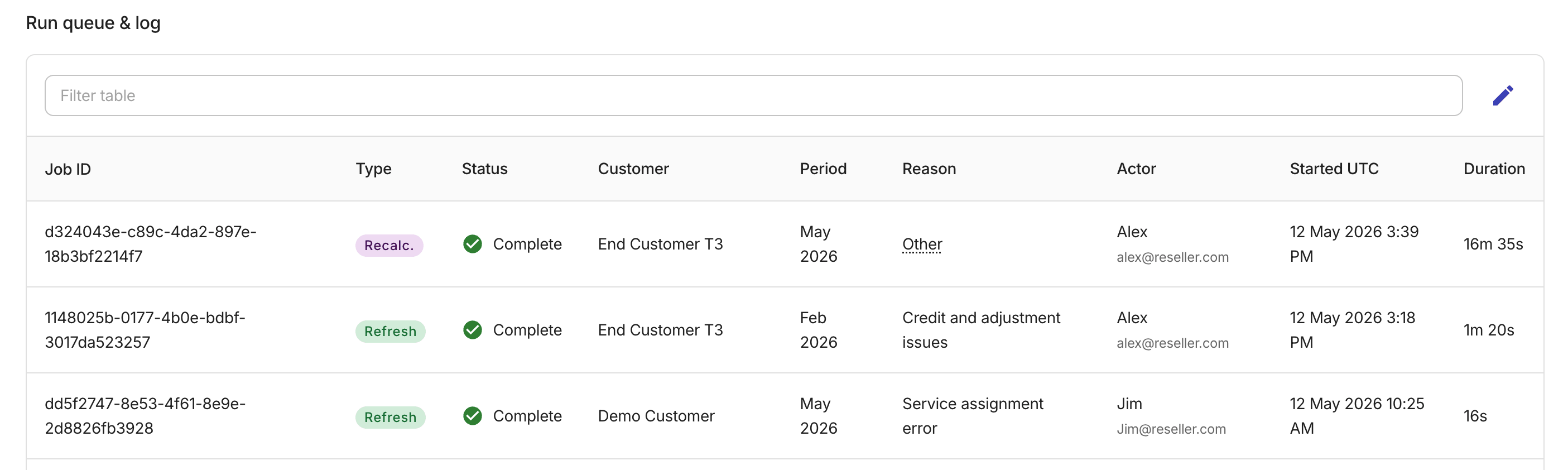
Each job entry includes the following details:
-
Job ID: Unique identifier for the job.
-
Type: The type of operation:
Recalc.for data recalculation orRefreshfor invoice refresh. -
Status: Current state of the job:
Running,Complete, orFailed.-
Running: The operation is in progress. The table continues to refresh while any job is in this state. No action needed.
-
Complete: The operation finished successfully.
-
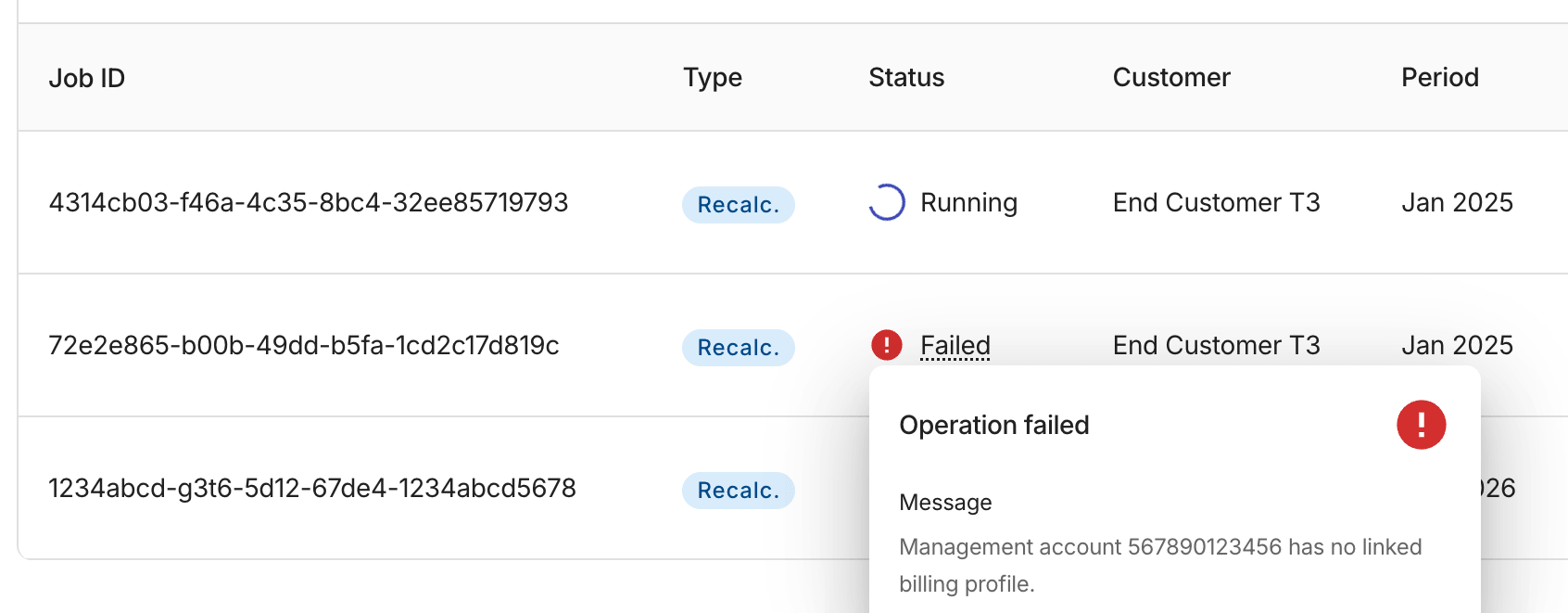
Failed: The operation encountered an error. Select the Failed badge to review the error message.
-
-
Customer: The customer the operation applies to.
-
Period: The billing period being processed.
-
Reason: Why the operation was triggered. If the reason is Other, select it to view the full explanation.
-
Actor: The user who initiated the job.
-
Started UTC: The date and time (UTC) when the job started. By default, jobs are sorted by start time with the most recent jobs first.
-
Duration: How long the job ran or has been running.